Grubby grout is honestly one of the most common complaints we hear from Melbourne homeowners. The good news? Knowing how to clean grout the right way makes a huge difference. and you don’t need expensive products.
This guide covers the best methods, what to avoid (some common cleaners actually damage grout), and how to keep it looking clean for longer. Plus, we’ll be upfront about when cleaning isn’t enough and regrouting is the real answer.
Why Grout Gets Dirty & Discoloured
Grout is porous. Its surface has tiny holes that absorb water, soap scum, grease, and dirt over time. In showers, steam pushes moisture into grout joints and encourages mould and mildew. On kitchen floors and tiles, cooking oils and foot traffic work their way into the grout.
The main causes of discolouration:
- Mould and mildew — most common in shower and wet area grout
- Soap scum and mineral deposits — hard water staining in shower grout lines
- Dirt and grease — kitchen floors and high-traffic tiles
- Dye transfer — from coloured cleaning products or floor cleaners
Unsealed grout stains significantly faster. We’ll get to that in the prevention section.
The Best Way to Clean Grout (Step by Step)
Everyday Cleaning
For regular maintenance, nothing fancy is needed.
What you’ll need:
- Warm water
- A few drops of dish soap
- A stiff-bristled grout brush or an old toothbrush
Steps:
- Mix warm water with a small amount of dish soap
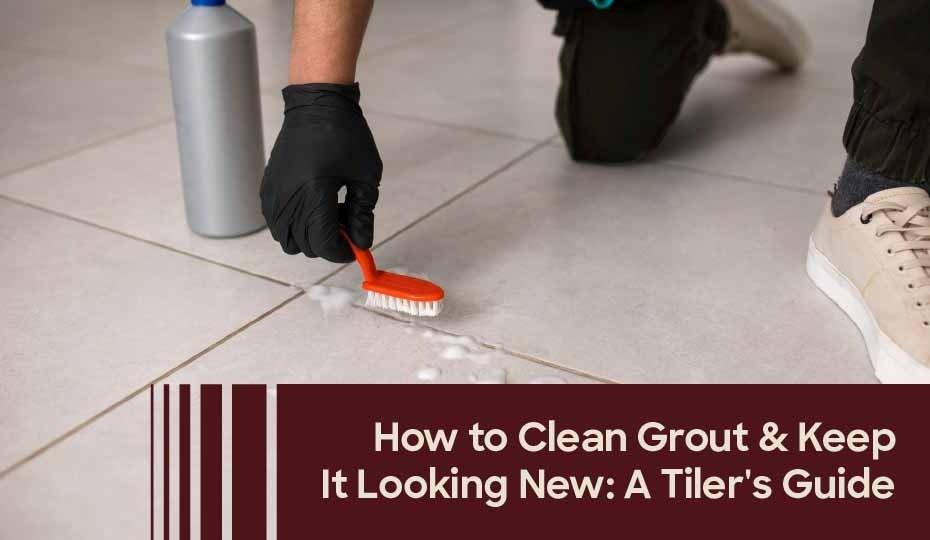
- Apply to grout lines and scrub with a stiff brush
- Rinse with clean water
- Dry the surface to prevent moisture sitting in the joints
Do this weekly in shower areas. It takes five minutes and stops heavy build-up from forming in the first place.
Deep-Cleaning Stained or Black Grout
For grout that’s heavily stained or has turned black, you need something stronger.
Oxygen bleach method (safest for most surfaces):
- Mix oxygen bleach powder (like Napisan or OxiClean) with water to form a paste
- Apply to grout lines and leave for 10–15 minutes
- Scrub with a stiff grout brush
- Rinse thoroughly with warm water
Bicarb soda + hydrogen peroxide method:
- Mix bicarb soda with 3% hydrogen peroxide to a spreadable paste
- Apply directly to grout lines and leave for 10 minutes
- Scrub and rinse well
For heavy mould in showers:
- Spray a commercial mould and mildew cleaner directly onto affected grout
- Allow it to dwell for the time specified on the label
- Scrub and rinse — ventilate the bathroom well while working
Cleaning Without Scrubbing
A steam cleaner is genuinely excellent for grout lines without the effort of scrubbing. The high-temperature steam breaks down grease, mould, and build-up, then rinses it away. It’s chemical-free, safe on most tiles, and works on both floor and wall grout.
Steam cleaner hire is roughly $30–$60 per day if you don’t own one.
Best Grout Cleaners (and What to Avoid)
Homemade vs Store-Bought
| Cleaner | Best For | Notes |
| Bicarb soda + hydrogen peroxide | General stains, light mould | Safe for most tiles and grout |
| Oxygen bleach (Napisan, OxiClean) | Heavy staining, mould | Rinse well; test on coloured grout first |
| Steam cleaner | All grout types | No chemicals; great for floor grout |
| Commercial grout cleaner (Aqua Mix, Lithofin) | Deep clean and restoration | Follow label; test in a hidden spot first |
| White vinegar | General cleaning on ceramic/porcelain only | See caution below |
What Can Damage Grout or Natural Stone
This is important. Some common cleaning methods actively damage grout or tiles.
Avoid these on grout:
- Undiluted bleach — strips colour from coloured grout and degrades the binder over time
- Harsh abrasive scrubbers — scratches tile surfaces and erodes grout joints
- Steel wool — damages the tile glaze permanently
Never use vinegar or acidic cleaners on:
- Natural stone tiles (marble, travertine, limestone) — acid permanently etches the surface
- Epoxy grout — repeated vinegar exposure degrades it over time
- Any unknown tile or grout finish — always test first in a hidden area
White vinegar gets recommended a lot online, but here’s the reality: it’s acidic enough to gradually erode grout joints with repeated use, and it’s genuinely dangerous on natural stone. Ceramic and porcelain tiles handle it reasonably well, but it’s not a great regular grout cleaner.
How to Stop Grout Getting Dirty Again
Sealing Grout
Sealing is the single most effective way to keep grout clean. A quality grout sealer penetrates the pores of the grout, making it water-resistant and far less likely to absorb stains.
How to seal grout:
- Make sure grout is completely clean and fully dry first
- Apply sealer with a small brush or applicator bottle, following each grout line
- Leave to penetrate for the specified time (usually 5–10 minutes)
- Wipe excess sealer off the tile surface before it dries
- Allow the sealer to cure fully before using the area (usually 24 hours)
Most sealers need reapplying every 1–2 years in wet areas, or every 2–3 years in lower-traffic areas.
Ventilation & Maintenance
In shower areas, ventilation is everything. Mould grows where moisture sits. If your bathroom dries out quickly after each shower, mould doesn’t get a chance to take hold.
- Run the exhaust fan during and for 15–20 minutes after every shower
- Squeegee tiles and screens after use to remove standing water
- Leave the shower door or screen open after use to allow air circulation
- Check silicone at junctions every few years; old, cracked silicone lets water in
When Cleaning Isn’t Enough: Regrout vs Clean
There’s a point where cleaning stops being the right answer and it’s worth knowing when you’ve hit it.
You probably need regrouting when:
- Grout is cracked, crumbling, or missing in sections
- Black mould returns within days of cleaning (it’s deep in the substrate, not just the surface)
- Grout has eroded visibly below the tile surface
- Tiles are becoming loose (grout is no longer holding them properly)
Regrouting means the old grout is mechanically removed from every joint and fresh grout is applied. It’s not just cosmetic. Fresh grout restores the waterproofing function of the tile joints. In shower areas, this is particularly important.
One thing we hear a lot at Secure Tiling: homeowners are often surprised by how affordable a professional regrout is and how different the finished result looks compared to years of trying to clean old, degraded grout.
Frequently Asked Questions
What is the best way to clean grout?
The most effective method is a paste of bicarb soda and hydrogen peroxide, or oxygen bleach, applied to the grout lines, left for 10–15 minutes, then scrubbed with a stiff brush and rinsed well. A steam cleaner is equally effective without chemicals.
How do you clean grout that has turned black?
Black grout is almost always mould. Apply an oxygen bleach paste or commercial mould cleaner, allow it to dwell, then scrub and rinse. If black mould returns within days of cleaning, it’s deep-set and regrouting is likely the better solution.
Can you clean grout without scrubbing?
Yes. A steam cleaner lifts build-up without scrubbing. You can also apply oxygen bleach or an enzymatic cleaner, leave it to dwell for 15–30 minutes, then rinse. Some heavy build-up will still require light scrubbing.
Does vinegar damage grout?
Vinegar is acidic and gradually erodes grout joints with repeated use. It should never be used on natural stone tiles (marble, travertine, limestone) as it permanently etches the surface. On ceramic and porcelain it’s less damaging, but still not the best choice as a regular grout cleaner.
What is the best grout cleaner in Australia?
For DIY use, oxygen bleach products (Napisan, OxiClean) and dedicated tile and grout cleaners (Aqua Mix, Lithofin) are well-regarded. A steam cleaner is the most effective physical method. For natural stone, always choose a pH-neutral cleaner specifically designed for stone.
How often should grout be cleaned and sealed?
Shower grout should be cleaned weekly and sealed every 1–2 years. Kitchen and floor grout can be cleaned monthly and sealed every 2–3 years. High-traffic areas may need more frequent attention.
Do you need to seal grout after cleaning?
If you’re doing a deep clean, it’s a great time to reseal straight after, especially in shower areas. Make sure the grout is completely dry first (allow at least 24 hours) before applying sealer.
When should I regrout instead of clean?
When grout is cracked, crumbling, missing, or has a deep-set mould that returns after every clean, regrouting is the right call. Regrouting restores the structural integrity and waterproofing of the joints. Cleaning alone can’t fix physical damage.
Still Can’t Get It Clean? It Might Be Time to Regrout
If your grout is cracked, crumbling, or harbouring mould that just won’t shift, cleaning isn’t the answer anymore. The right fix is regrouting. It makes the bathroom look genuinely new again.
Secure Tiling offers professional regrouting across Melbourne. Get a free quote and find out what it would take to have fresh, clean grout for good. Request a free regrouting quote.