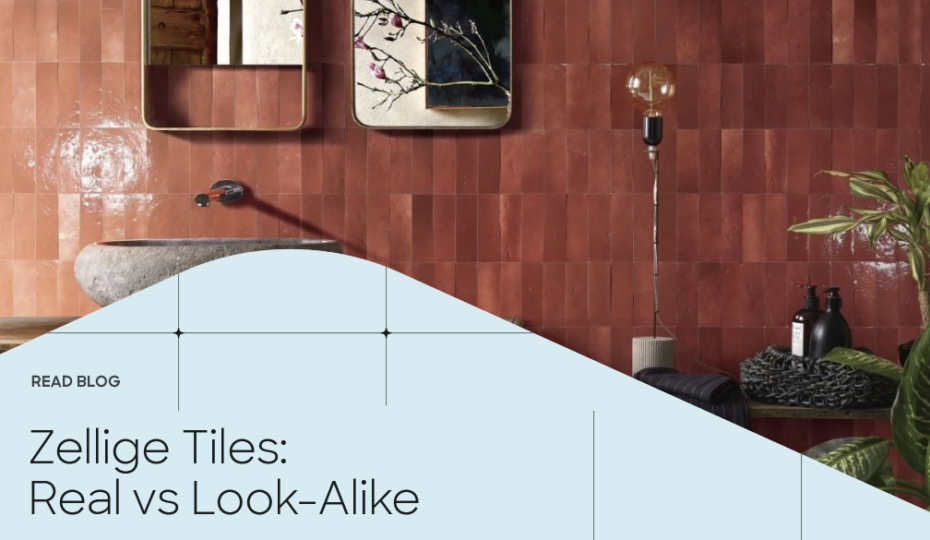
Zellige tiles are handmade glazed clay tiles from Morocco, and no two of them look quite alike. Each tile has its own shade, edge, and surface, which gives a wall a soft, uneven glow that factory tiles can’t copy. You’ll mostly see them on splashbacks, bathroom walls, and feature walls. Real zellige is uneven by design, so it needs a patient tiler and narrow, matched grout. Zellige-look porcelain gives a similar mood with straighter edges.
Here’s how the two compare, plus where to use them, how to grout them, how they’re laid, and how to look after them.
What Are Zellige Tiles?
Zellige comes from Fez in Morocco. Makers shape wet clay by hand, glaze it, then fire it in a kiln. That process explains the variation. You’ll see pooled glaze, tiny pits, fine crazing, and edges that aren’t perfectly square. It’s part of the charm, not a defect.
The classic size is 100 x 100 mm. Makers also produce bejmat, a rectangular version. Under the glaze sits a handmade terracotta body, so the tile behaves differently from a standard wall tile. Most zellige tiles in Australia are imported, so stock and lead times can vary.
For the history behind the craft, this overview of zellij tilework is a good start.
Real Zellige vs Zellige Look Tiles
Both options can look great. The right one depends on how much variation you can live with.
| Feature | Real zellige | Zellige look porcelain |
| Edges | Uneven, hand-finished | Straighter, more consistent |
| Colour | Changes from tile to tile | Varies less |
| Surface | Pits, crazing, pooled glaze | Smoother and more even |
| Sealing | Usually needed | Not needed |
| Laying | Slower, needs patience | Closer to standard tiling |
| Best for | Walls | Walls, and some floors |
If wonky edges make you nervous, zellige-look tiles are the safer pick. Some ranges come as rectified porcelain tiles, which have square edges and allow very fine grout lines. That gives a cleaner, more modern finish than the real thing.
Where Zellige Tiles Work Best
Splashbacks and feature walls
This is where zellige shines. Light bounces off the glaze and shifts as you walk past. A splashback is a small area, so the extra labour stays manageable. For layout inspiration, browse our kitchen splashback ideas.
Bathrooms and showers
Zellige suits bathroom walls nicely. Showers are less clear-cut. Whether real zellige can go in a shower depends on the product and the maker, so check the supplier’s guidance first. Waterproofing goes down before any tile, whichever you choose. Our bathroom tile ideas and trends show what’s popular right now.
Floors and outdoors
Most real zellige is made for walls. Handmade glazed clay can chip under foot traffic, and a glossy glaze may feel slippery when wet. For floors, zellige-look tiles are usually the better choice. If you like clay underfoot, our guide to terracotta tiles in Melbourne covers that option.
Colours and Formats
Zellige comes in a wide range of glazes. Whites, creams and soft greens sell well. Deeper blues and earthy tones suit a bold feature wall. Because the glaze varies, even a single colour shows movement.
Common formats include:
- Square, usually 100 x 100 mm
- Bejmat, the rectangular style
- Slim subway
- Honeycomb
Slim subway shapes follow the same layout rules as our subway tiles guide. Order every box at once, because colour can shift between batches.
Choosing Grout for Zellige
Zellige tiles sit very close together, so the grout line is thin. That makes colour choice matter. A matched colour keeps the wall soft and calm. A contrast colour outlines every uneven edge for a bolder look.
Tilers commonly use unsanded, fine zellige tile grout, since sanded grout can scratch the glaze. Real zellige also has porous pits and bare edges. Many makers advise sealing before grouting so the grout doesn’t stain them, then sealing again after. Others use a grout release. Follow the supplier’s sealing steps rather than one fixed rule.
If you’re considering epoxy, check with the supplier first. Our epoxy grout vs cement grout comparison explains the trade-offs.
How Zellige Is Laid
Zellige takes longer to lay than standard tile. Here’s what tilers commonly do:
- Start with a flat, waterproofed surface.
- Mix tiles from several boxes to spread out colour.
- Use white adhesive, which helps keep light glazes true.
- Back butter each tile so it sits fully bedded.
- Butt the tiles tight, because the edges aren’t perfectly straight.
- Seal and grout following the supplier’s steps.
Allow roughly 15 percent extra for handmade tiles. Cuts, chips and shade matching use up more than you’d expect. Because the job is slower, quotes usually come after measuring. If you’re planning a kitchen, our kitchen tiling in Melbourne team can talk it through.
Sealing, Cleaning and Care
Real zellige needs a bit more attention than porcelain. Seal it as the supplier advises. Clean with a mild, neutral cleaner and a soft cloth. Harsh or abrasive products can dull the glaze, so skip them. Wipe splashes near the cooktop soon after they happen. Pits and hairline crazing are normal and usually don’t mean the tile has failed.
Zellige-look porcelain needs no sealing and cleans like any other porcelain.
Is Zellige Worth It? Pros and Cons
Zellige isn’t for everyone. Here’s a fair look.
Pros
- Rich, varied colour and shine
- Handmade character you can’t fake
- Great for splashbacks and feature walls
Cons
- Uneven edges and shade changes
- Slower to lay
- Usually needs sealing
- Mainly suited to walls
Zellige Tile FAQs
Can zellige tiles go on a floor?
Most real zellige is made for walls. Check the maker’s guidance. Zellige-look porcelain is usually the easier choice underfoot.
Can you use zellige tiles in a shower?
It depends on the product and the maker. Ask the supplier first. Waterproofing is needed behind the tile either way.
How much extra zellige should I order?
Around 15 percent is a common allowance for handmade tiles. It covers cuts, chips, and shade matching.
Do zellige tiles need sealing?
Real zellige usually does, and the steps vary by supplier. Zellige-look porcelain doesn’t.
What grout colour works best with zellige?
A matched colour gives a soft, calm look. A contrast colour highlights the uneven edges. Choose fine, unsanded grout either way.