Your splashback is the kitchen’s jewellery. It’s the one surface everyone notices first, and it sets the tone for the whole room. If you’re stuck on kitchen splashback ideas for your Melbourne home, this guide covers the styles, colours and materials worth considering in 2026.
A splashback does more than protect your wall from grease and steam. It ties your benchtop, cabinets, and flooring together. Get it right, and the kitchen feels finished. Get it wrong, and nothing else quite lands either. Let’s look at what’s working right now.
Kitchen splashback ideas by style
Melbourne kitchens lean toward a mix of classic and bold this year. Some homeowners want something safe and timeless. Others want a feature wall that makes a statement. Both approaches work, as long as the style suits the rest of the room.
Before picking a look, it helps to understand your material options in depth. Our splashback tiles guide breaks down porcelain, ceramic and glass so you can weigh up durability and cost before committing to a design.
Subway, herringbone, and mosaic
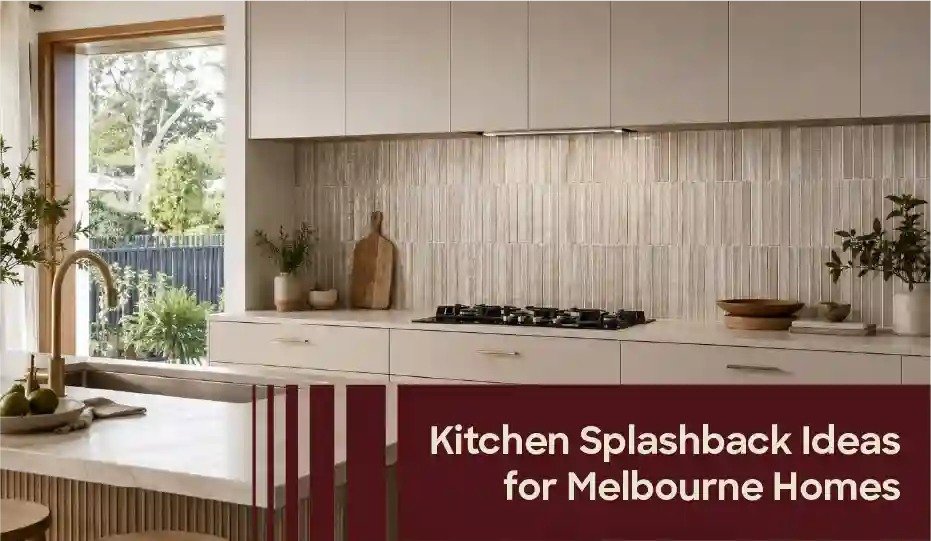
Subway tiles remain a popular kitchen splashback choice, and they’re not going anywhere soon. The classic horizontal layout still works, but a lot of homeowners are now stacking tiles vertically for a fresher look. Warm tones like linen and soft sage also feel more current than stark white.
Herringbone splashback layouts add movement without adding colour. The zigzag pattern catches light differently depending on where you stand, which gives even plain white tiles some personality. It suits both modern and traditional kitchens.
Mosaic kitchen splashback tiles work best as a feature rather than covering the whole wall. A small mosaic panel behind the cooktop draws the eye without overwhelming the space. Because the tiles are so small, mosaic patterns also hide grease splatter well, which is handy for a busy kitchen.
Modern, classic, and bold colour
A modern kitchen splashback often meanslarge-formatt tiles with minimal grout lines. Fewer joins mean a cleaner look and less cleaning down the track. Neutral tones dominate here, but a soft grey or warm stone colour still reads as contemporary.
Classic white kitchen splashback tiles never really go out of fashion. They brighten the room, pair with almost any cabinet colour, and make a small kitchen feel bigger. The drawback is that white shows stains more easily, so sealing matters.
If you want something bolder, splashback colours like terracotta, deep green or navy are having a moment. A contrasting splashback behind white cabinetry adds character without a full renovation. Just remember that bold colours date faster than neutrals, so consider whether you’re planning to stay in the home long term.
Choosing a splashback to match your benchtop and cabinets
Your splashback shouldn’t be picked in isolation. It needs to work with your benchtop, your cabinets, and your flooring, or the kitchen ends up feeling disjointed.
One common approach is matching the splashback to the benchtop material. Continuing the same stone or tile up the wall creates a seamless look, especially in kitchens without much upper cabinetry. It’s a striking option, though it usually costs more than a standard tiled kitchen splashback.
Another approach is contrast. A stone benchtop paired with a warm-toned tile splashback can look layered and considered rather than matchy. This works particularly well if your cabinets are already a strong colour, since the splashback doesn’t need to compete for attention.
If you’re unsure where to start, the design experts at Houzz cover this well in their guide on how to choose the best splashback for your kitchen, which discusses material and colour pairing in more detail. It’s worth a browse before you commit to samples.
Lighting matters too. A splashback that looks great under showroom lights can read completely differently in your kitchen. Take tile samples home and check them under your actual lighting, morning and evening, before you decide.
Tile vs glass kitchen splashback
This is the decision most homeowners get stuck on. Both tile and glass splashbacks are common in Melbourne kitchens, and both have genuine strengths.
Tiled kitchen splashbacks offer more variety. You can choose from mosaic, subway, herringbone, and dozens of colours and finishes. Tiles also handle heat well and are easy to repair individually if one gets cracked or chipped. The downside is grout lines, which need regular cleaning and occasional resealing.
Glass splashback panels give you a seamless surface with no grout at all. They’re easier to wipe down, and they reflect light well, which can make a kitchen feel more open. Acrylic splashback panels are a cheaper alternative to glass, though they’re less heat-resistant and better suited to areas away from the cooktop.
Cost usually favours tile, especially for larger areas. Glass splashbacks can look stunning, but a full custom panel is often a bigger investment than an equivalent area of tile. If the budget is tight, a tiled splashback with a simple layout still delivers a great result.
Neither option is universally better. It really comes down to your budget, your maintenance preferences, and the overall style you’re chasing. Browse our completed tiling projects to see how different splashback styles look once they’re actually installed in a real Melbourne home, rather than in a showroom display.
How to tile a kitchen splashback (or hire a pro)
Tiling a splashback yourself is possible if you’re handy and the area is small and simple. You’ll need a level surface, the right adhesive, tile spacers, and a wet saw for cuts around power points and cabinets. Measure twice before you cut anything, since kitchen splashbacks often involve tricky angles around windows and rangehoods.
However, most homeowners choose to hire a professional, and there’s a good reason for it. A cooktop splashback usually sits close to heat and moisture, so it needs the right adhesive and correct clearances to meet safety standards. A crooked tile line is also hard to unsee once it’s grouted in.
Our tiling service covers kitchen splashbacks from measure to install, including tricky cuts around powerpoints and rangehoods. We handle the layout planning so patterns like herringbone or subway line up properly, not just close enough.
Ready to update your kitchen?
Get a Free Quote or Call Us +61 472 712 045
Get your free quote here, and we’ll talk through the right splashback for your space, your budget and your timeline.
Frequently asked questions
What is the most popular kitchen splashback?
Tiles remain the most common choice for kitchen splashbacks in Australia, and subway tile is still a strong favourite. However, glass splashbacks are gaining ground fast because of their seamless, low-maintenance finish. Which one suits you best usually comes down to budget and how much upkeep you’re willing to do.
What colour splashback is timeless?
White and off-white are generally considered the safest, most timeless splashback colours. They pair with almost any cabinet and benchtop combination, and they won’t feel dated in a few years. Soft neutrals like warm grey or stone also age well if you want something with a bit more depth than plain white.