Terracotta Tiles in Melbourne: Cost, Care and Pitfalls
Terracotta has that warm, sun baked look that never really goes out of style. It makes a kitchen feel lived in rather than showroom perfect. But terracotta is also tricky to get right, especially in a climate like Melbourne’s. This guide covers what terracotta actually is, where it works, where it does not, and how to keep it looking good for decades.
What Are Terracotta Tiles?
Terracotta tiles are made from fired clay. The name literally means baked earth. That clay gives terracotta its signature warm, earthy colour range, from soft orange to deep rust and brown.
Terracotta, Cotto and Clay Tiles, Are They the Same Thing?
Pretty much, yes. Cotto tiles is just the Italian term for the same fired clay product, often used to describe the classic Tuscan style terracotta. Clay tiles is a broader term that covers terracotta along with a few other fired clay products. If a supplier uses any of these terms, they are talking about essentially the same material.
Glazed vs Unglazed Terracotta
This distinction matters more than the naming.
- Unglazed terracotta: the raw, natural clay finish. Porous, needs sealing, and develops a patina over time
- Glazed terracotta: coated with a glass like layer that adds colour, shine and some water resistance
Unglazed is the classic look most people picture when they think terracotta. Glazed versions are easier to maintain but lose some of that raw, handmade character.
Where Terracotta Works, and Where It Does Not
Terracotta is not a one size fits all tile. Where you use it matters a lot.
Indoor Floors and Living Areas
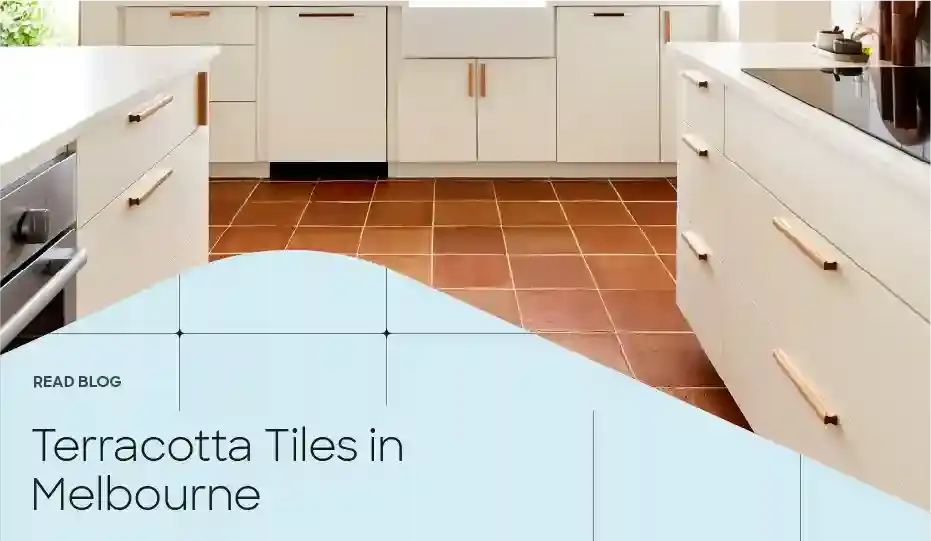
This is where terracotta shines. Kitchens, dining rooms and living areas with a Mediterranean or rustic feel suit terracotta perfectly. It handles moderate foot traffic well once sealed, and it only gets more character over time.
Bathrooms and Wet Areas
Terracotta bathroom tiles are possible, but they need serious sealing. Bathrooms deal with constant moisture, and unsealed terracotta will absorb water fast. If you want the terracotta look in a bathroom, go glazed or make sure your tiler applies a proper penetrating sealer before grouting.
Outdoor Patios, Alfresco and Pool Surrounds in Melbourne
This is where things get tricky. Traditional terracotta was designed for hot, dry Mediterranean climates, not Melbourne’s wet winters and frost. Unsealed or poorly sealed terracotta outdoors can crack, flake or stain.
If you love the terracotta look for an alfresco or patio, ask about frost resistant or fully vitrified versions, or look at our guide to the best outdoor tiles for Melbourne patios for alternatives that handle our weather better.
The Disadvantages of Terracotta Tiles
Terracotta is not perfect. Here is what to watch out for.
Porosity and Staining
Unglazed terracotta is highly porous. Oil, wine, and even water can stain it if the sealer is not doing its job. Kitchens are the biggest risk zone here.
Efflorescence and Salt Damp
Efflorescence shows up as a white, powdery residue on the tile surface. It happens when moisture moves through the tile and brings salts with it. Poor waterproofing under the tile usually causes it, so substrate prep matters as much as the sealer.
Frost and Melbourne Winters
Standard terracotta was never built for frost. Water trapped in the porous clay can expand when it freezes, cracking the tile from the inside. For outdoor use in Melbourne, this is the number one reason to choose a frost rated product.
How Long Do Terracotta Tiles Last?
A well sealed, properly installed terracotta floor can easily last 30 to 50 years indoors. Outdoor terracotta has a shorter realistic lifespan in Melbourne conditions unless it is a frost rated product, since freeze and thaw cycles take a toll over time.
Sealing and Maintaining a Terracotta Floor
Sealing is not optional with terracotta. It is the difference between a floor that lasts decades and one that stains within a year.
Choosing a Penetrating Sealer
A penetrating sealer soaks into the clay rather than sitting on top like a topical coating. This lets the tile breathe while still blocking moisture and stains. Ask your tiler for a sealer rated specifically for terracotta or unglazed clay tiles.
How Often to Reseal
- Indoor terracotta: reseal every 2 to 3 years
- High traffic kitchens: closer to every 1 to 2 years
- Outdoor terracotta: annually, or before winter each year
Cleaning Without Stripping the Sealer
- Use a pH neutral cleaner, never anything acidic or harsh
- Skip vinegar based products completely
- Sweep or dust mop regularly rather than wet mopping too often
- Wipe up spills quickly, especially oil and wine
Terracotta vs Ceramic vs Porcelain: Cost and Performance
Here is how terracotta stacks up against the two most common alternatives.
| Feature | Terracotta | Ceramic | Porcelain |
| Look | Warm, rustic, unique | Consistent, versatile | Consistent, can mimic stone |
| Maintenance | High, needs sealing | Low | Very low |
| Water resistance | Low unsealed | Moderate | Excellent |
| Cost | Mid to high | Low to mid | Mid to high |
| Best for | Indoor living areas, Mediterranean style | Budget renovations | High traffic, wet areas, outdoor |
If you want the terracotta look with none of the maintenance, marble look tiles or porcelain tiles in a terracotta colourway are worth a look. For a full breakdown, check out our guide on how ceramic and porcelain compare.
Laying Terracotta: What a Tiler Needs to Get Right
Terracotta is not a forgiving tile to install. A few things need to be spot on.
Substrate and Adhesive
The substrate needs to be flat, stable and properly primed. Terracotta absorbs moisture from adhesive fast, so a tiler needs to use the right adhesive and working time to avoid weak bonding.
Grout Colour and Joint Width
Grout colours matter a lot with terracotta since the tile itself has such a strong, warm tone. A grout that is too stark or too dark can clash. Wider joints are also more traditional for terracotta and suit the handmade look better than tight, modern joints. Once it is laid, keeping grout clean becomes part of the regular maintenance routine too.
Slip Ratings for Outdoor Terracotta
Any terracotta used outdoors or around pools needs an appropriate slip rating. A textured or tumbled finish gives much better grip than a smooth glazed surface, which matters a lot once the tile gets wet.
What Terracotta Tiling Costs in Melbourne
Terracotta generally sits in the mid to premium price bracket, above budget ceramic but often comparable to natural stone tiles like limestone tiles or sandstone tiles. Pricing depends on finish, whether it is imported or locally made, and installation complexity.
For an accurate number based on your space, get in touch directly.
Frequently Asked Questions
What Are the Disadvantages of Terracotta Tiles?
The main downsides are porosity, staining risk and the need for regular sealing. Terracotta can also suffer from efflorescence if waterproofing underneath is not done properly, and standard terracotta is not frost resistant, which matters for outdoor use in Melbourne.
What Is the Lifespan of Terracotta Tiles?
A well maintained indoor terracotta floor can last 30 to 50 years. Outdoor terracotta typically has a shorter lifespan in Melbourne conditions unless it is specifically rated for frost resistance.
Is Terracotta Cheaper Than Ceramic?
No, terracotta is generally more expensive than standard ceramic tiles. It sits closer to natural stone tiles in price, largely due to the material itself and the extra labour involved in sealing and installation.
Are Clay Tiles the Same as Terracotta Tiles?
Clay tiles is a broader category that includes terracotta. All terracotta tiles are clay tiles, but not all clay tiles are terracotta specifically.
Final Thoughts
Terracotta brings a warmth and character that porcelain or ceramic just cannot fake. It is more work to maintain, and it needs the right approach for Melbourne’s climate, but for the right space, it is worth it.
If you are considering terracotta tiles, cotto tiles or clay tiles for your next project, our team can guide you through the right sealing, substrate prep and grout choices. Browse Secure Tiling‘s material guides for more, or get in touch with expert tilers in Melbourne to talk through your project. You can also check our guide to choosing floor tiles room by room if you are still deciding on the right tile for each space.
Get a Free Quote or Call Us on +61 472 712 045 and we will help bring your terracotta project to life.