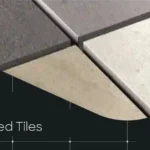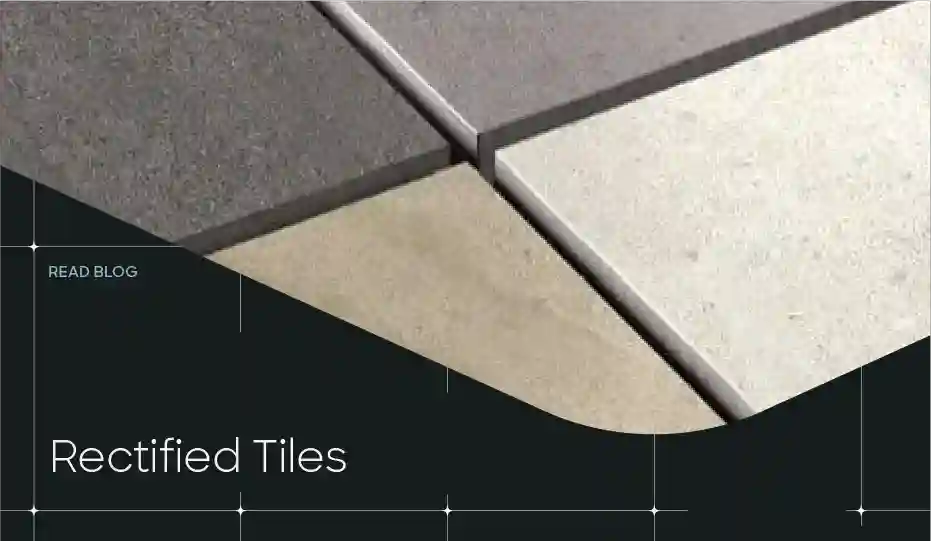
Rectified tiles are tiles cut or ground after firing so every edge is straight, and every tile is the same size. That precision allows thin grout lines and a neat, modern look. It also asks more from the floor and the tiler. Here’s what rectified tiles are, where they shine, and why the labour often costs more.
What Are Rectified Tiles?
Every tile shrinks a little in the kiln. Because of that, sizes can vary slightly from one tile to the next. Makers fix this with a second step. They grind or cut each tile to an exact size and a sharp 90-degree edge.
That extra step explains two things. You get crisp, straight edges. You also pay a bit more at the shop.
You’ll often see “rectified” or “R” on the box. If you can’t find it, ask the supplier. It’s an easy question, and the answer changes how we lay the job.
Rectified vs Non-Rectified (Cushion Edge) Tiles
Non-rectified tiles keep their natural edges. Makers often call them cushion edge, soft edge, or pillow edge. The corners look slightly rounded, and sizes vary a little.
That small variation is why non-rectified tiles need wider grout joints. The grout hides the differences. It gives a classic look and forgives uneven edges.
| Rectified | Non rectified | |
| Edge | Sharp and straight | Soft and slightly rounded |
| Size variation | Very small | Slightly larger |
| Grout joint | Narrow | Wider |
| Look | Modern, seamless | Traditional |
| Floor needs | Very flat | More forgiving |
| Price | Often higher | Often lower |
Neither type is better in every case. It depends on your floor, your budget, and your style. Material also plays a part, and our guide on how to choose the right floor tiles helps you compare porcelain, ceramic and stone before you pick an edge.
Pros and Cons of Rectified Tiles
Rectified tiles have clear strengths. They also have some trade-offs.
Pros
- Thin grout lines give a clean, continuous look.
- Tiles line up neatly, so patterns look sharp.
- Less visible grout means less to scrub.
- Large sizes suit open areas well.
Cons
- They often cost more per square metre.
- They need a flatter floor than non-rectified tiles.
- Thin joints show every small height difference.
- Laying takes more time and care.
Two questions come up a lot. Both deserve a closer look.
Do Rectified Tiles Need Grout? Minimum Joint Widths Under AS 3958.1
Yes, they do. Thin joints still need grout. Grout locks the tiles in place, lets the floor move slightly, and keeps water out.
Many makers suggest joints between 1.5mm and 3mm for rectified tiles. The Australian Standard AS 3958.1 sets out installation guidance, including minimum joint widths. Many tilers work to about 2mm as a safe minimum. Rules can vary by tile size and use, so check the standard and the maker’s advice for your product.
We don’t push tiles tight together to get a “no grout” look. Tiles that touch can chip at the edges. They can also crack when the floor moves.
Lippage and Why Rectified Tiles Need a Flat Floor
Lippage is when one tile edge sits higher than the next. You can often feel it with your foot before you see it.
Wide grout joints hide a small step. Thin joints don’t. A rectified tile on an uneven floor will show every dip and bump. Large tiles make it worse, since a long tile bridges any hollow underneath.
So, the real work happens before the first tile goes down. We check the floor with a long straight edge. Then we grind high spots or level low ones as needed. This step matters most on older Melbourne homes, where floors often have slight slopes.
Why Rectified Tiles Can Cost More to Lay: Flat Floors and Levelling Clips
The tile price is only part of the bill. Labour often rises too. Here’s why.
- Floor prep: A floor that needs levelling adds time and materials.
- Slower setting out: Thin joints leave no room for error, so we measure more.
- Back buttering: Large tiles often need adhesive on the tile and the floor for full coverage.
- Levelling clips: These small clips and wedges hold neighbouring tiles at the same height while the adhesive cures. They add cost and take time to fit and remove.
- Cleaner cuts: Sharp edges show chips. We often use better blades and take extra care.
Grout choice can add cost as well. Thin joints often suit a fine, strong grout. Epoxy is one option, and our post on epoxy grout vs cement grout explains where it pays off.
Prices vary by job, so we quote after seeing the floor. A flat slab costs less to prepare than a sloping one. That’s why two similar rooms can get different quotes.
Where Rectified Tiles Work Best in a Melbourne Home
Rectified tiles suit spaces where you want a clean, calm look. A few places stand out.
- Living areas: Large rectified tiles make a room feel open and uncluttered.
- Bathrooms: Wall tiles with thin joints look sleek. Shower floors need more thought, because of the slope to the drain.
- Kitchens: A big rectified floor tile wipes clean easily. Fewer joints also means fewer places for crumbs to settle.
- Hallways: Long, straight runs show off tight, even joints.
They suit some jobs less well. A very uneven old floor may suit non-rectified tiles better. Wider joints cope with the bumps and often save money. If you plan a new kitchen, our kitchen tiling service covers floors, splashbacks and walls from prep to finish.
Rectified Tiles FAQs
What does rectified mean on tiles?
Rectified means the maker cuts or grinds each tile after firing. This gives every tile the same size and a straight, sharp edge. Because of this, tiles sit closer together with thin grout lines. You’ll often see “rectified” or “R” on the box or product sheet.
What are the disadvantages of rectified tiles?
They often cost more to buy and more to lay. Thin joints show lippage, so the floor must be very flat. Sharp edges can chip during cutting or handling. Installation also takes more time, so labour costs can rise. Many people still find the look worth it.
Does rectified tile need grout?
Yes. Rectified tiles still need grout, even with thin joints. Grout holds the tiles in place, allows slight movement, and blocks water. Joints often run between 1.5mm and 3mm. Check the tile maker’s advice and AS 3958.1 for the right width on your job.
Why are rectified tiles more expensive to lay?
The floor must be very flat, so prep takes longer. Thin joints need careful setting out. Many jobs also need levelling clips and full adhesive coverage on large tiles. Sharp edges call for extra care when cutting. Together, these steps add time, which raises labour costs.