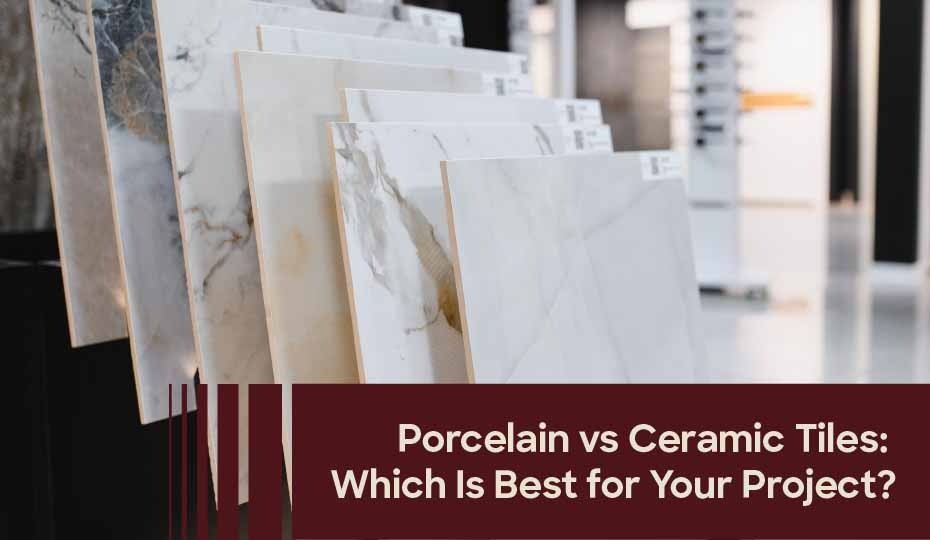
When you compare porcelain vs ceramic tiles, the choice comes down to how each one performs in your home. Both tiles look similar on the showroom floor. But they differ in strength, water resistance, and price.
This guide explains the key differences. We will cover where each tile works best, from bathrooms to outdoor areas.
By the end, you will know which tile suits your Melbourne home. And if you want expert advice, Secure Tiling can help you choose and install the right one.
Ceramic vs Porcelain: The Key Differences
Ceramic and porcelain tiles both start as clay. The difference comes from the type of clay and how hot it gets fired. This changes how each tile performs once it is laid.
Water absorption and density
Porcelain tiles use a finer, denser clay. They get fired at a higher temperature. This makes them less porous, so they absorb very little water. Most porcelain tiles absorb less than 0.5% of their weight in water.
Ceramic tiles use a coarser clay and a lower firing temperature. This makes them more porous. They can absorb more moisture over time. This matters most in wet rooms and outdoor spaces.
Durability and hardness
Porcelain tiles score higher on the PEI rating scale. This scale measures how well a tile resists wear from foot traffic. Porcelain holds up well in busy areas like hallways and kitchens.
Ceramic tiles are still tough. They suit most home areas, including bedrooms and living rooms. They are just not as hard as porcelain, so they can chip more easily under heavy impact.
Cost
Ceramic tiles usually cost less per square metre. This makes them a good budget choice for many rooms. Prices often range from around $30 to $60 per square metre, depending on the design and finish.
Porcelain tiles cost more to make, so they carry a higher price tag. Prices often start around $50 and can go well past $100 per square metre for premium ranges. The extra cost reflects their strength and lower water absorption. For high traffic or wet areas, this cost often pays off in the long run.
If your budget is tight, talk to our team about a free, no-obligation quote. We can suggest the best mix of ceramic and porcelain for your space and your budget.
One thing worth flagging: these price ranges are general estimates for the Melbourne market. It’s worth confirming current supplier pricing before publishing, since tile prices shift fairly often.
Which Is Best for Bathrooms and Wet Areas?
For the best tiles for bathroom use, porcelain is usually the safer pick. Its low water absorption helps protect the substrate behind the tile from moisture damage over time.
Ceramic tiles can still work in bathrooms, especially on walls. Walls get far less water exposure than floors. A glazed ceramic tile on a shower wall is a common and practical choice.
This is also where grout matters. Grout is the material that fills the gaps between tiles. It seals the joints and stops water from seeping through to the layers below. Good grout choice and proper sealing are part of what makes a bathroom waterproof.
Australian Standards set out clear waterproofing rules for wet areas in homes. The Victorian building regulations explain what is required for waterproof membranes and tiling in bathrooms. A licensed tiler will know how to meet these rules.
For more ideas on layouts, colours, and finishes, check out our Bathroom Tile Ideas guide.
Which Is Best for floors vs. walls?
Floors take far more impact than walls. People walk on them every day. Furniture gets dragged across them. This is why floor tiles need higher durability.
Porcelain is a strong choice for floors in any room. Its hardness and density help it resist scratches and cracks. It also handles spills better than ceramic.
Ceramic tiles are a great fit for walls. Walls do not need the same level of impact resistance. Ceramic tiles are also lighter, which makes them easier to handle during installation.
In low-traffic rooms, ceramic floor tiles can still work well. A spare bedroom or a small powder room is a good example. The lower cost makes ceramic an easy choice for these spaces.
Can You Use Them Outdoors?
Porcelain tiles are the better choice for outdoor areas. Their low water absorption gives them strong frost resistance. This matters in Melbourne, where temperatures can drop sharply overnight.
When water soaks into a tile and then freezes, it expands. This can crack the tile. Porcelain resists this because it holds so little water in the first place.
Ceramic tiles are not usually recommended for outdoor use in Melbourne. Their higher water absorption makes them more likely to crack after frost. If you already have ceramic outdoors, keep an eye on it during winter.
For outdoor areas, slip rating also matters. Look for tiles with a slip rating suited to wet, exposed surfaces. Our guide on the Best Outdoor Tiles covers this in more detail.
How to Choose for Your Melbourne Home
Start by thinking about the room. Wet areas and outdoor spaces favour porcelain. Dry, low-traffic rooms suit either ceramic or porcelain.
Next, think about your budget. Ceramic tiles can stretch your budget further across a renovation. Porcelain may cost more upfront, but it can last longer in demanding spaces.
Finally, think about the look you want. Both ceramic and porcelain tiles come in a huge range of colours, patterns, and finishes. Some porcelain tiles even mimic natural stone, with the added benefit of lower maintenance.
A common scenario we see is a mixed approach. Porcelain on the bathroom floor. Ceramic on the bathroom walls. This balances performance with cost across the whole room.
Conclusion: Get Expert Advice from Secure Tiling
There is no single winner in the porcelain vs ceramic tiles debate. The right tile depends on the room, the budget, and how the space gets used. Porcelain suits wet areas, high-traffic floors, and outdoor spaces. Ceramic suits walls and lower traffic rooms, often at a lower cost.
If you are still unsure, our team can help. We can assess your space, recommend the right tile, and provide a clear, honest quote. Visit our Tiling Services page to get a free, no obligation quote from Secure Tiling in Melbourne.
FAQs
What is the difference between ceramic and porcelain tiles?
Porcelain tiles use denser clay fired at higher heat, making them harder and less absorbent. Ceramic tiles use a coarser clay and absorb more water. This makes porcelain better for wet or high-traffic areas.
Which is better for a bathroom, ceramic or porcelain?
Porcelain is generally better for bathroom floors due to its low water absorption. Ceramic works well on bathroom walls, where water exposure is much lower.
Is porcelain more expensive than ceramic?
Yes, porcelain usually costs more per square metre than ceramic. The higher price reflects its added strength and durability, which can save money on repairs later.
Which tile is more durable?
Porcelain is more durable overall. It has a higher PEI rating, meaning it resists scratches and wear better than ceramic.
Can porcelain tiles be used outdoors?
Yes, porcelain tiles work well outdoors. Their low water absorption gives them strong frost resistance, which suits Melbourne’s cooler months.
Are porcelain tiles harder to cut and install?
Porcelain tiles are harder and denser, so they need sharper tools and more care to cut cleanly. A licensed tiler with the right equipment can handle this without trouble.
Which tile is best for my project?
It depends on the room and how it gets used. For a tailored answer, Secure Tiling can assess your space and recommend the right tile for your project.