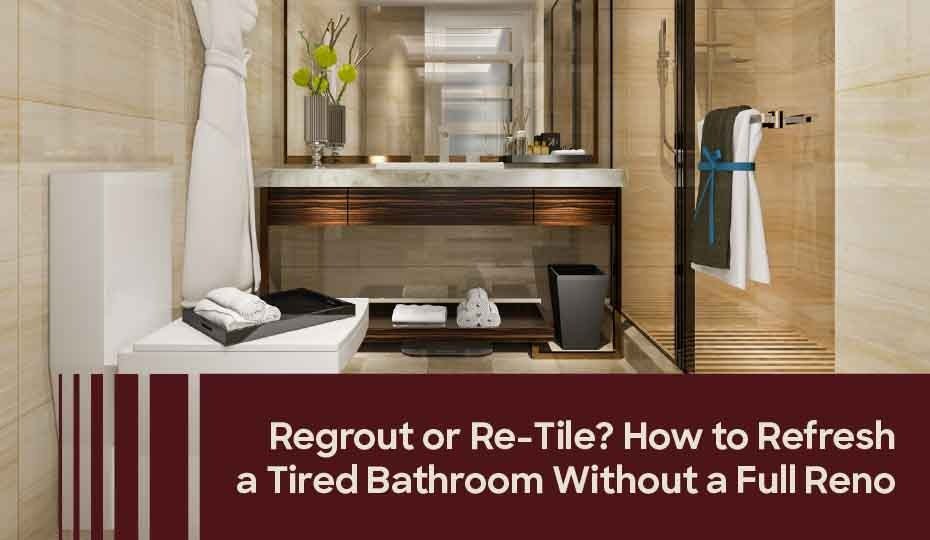
Your bathroom looks tired, but is it really time for a full re-tile? In most cases, regrouting is the answer. Regrouting refreshes the look of your tiles, fixes small leaks, and stops mould from spreading. It costs far less than a re-tile and takes a fraction of the time. This guide explains how to tell the difference, what each option costs, and when a re-tile is truly worth it.
What Is Regrouting?
Regrouting means removing old, damaged grout and replacing it with new grout. Grout is the material that fills the gaps between your tiles. Over time, grout cracks, stains, or grows mould. Regrouting fixes these issues without touching the tiles themselves.
At Secure Tiling, our Melbourne team handles regrouting jobs every week. Most bathrooms only need this simple fix. You can read more about our Grouting and Regrouting services if you want to see what is involved.
Regrouting also gives your bathroom a quick visual lift. Fresh grout lines make tiles look new again, even if the tiles themselves are years old. It is one of the most cost-effective updates a bathroom can get.
Signs You Only Need a Regrout (Not a Re-Tile)
Many homeowners assume cracked grout means a full re-tile. That is rarely true. Here are the signs that point to a simple regrout.
- Grout lines look dirty, stained, or discoloured
- Small cracks appear in the grout, but the tiles are solid
- You see mould or mildew along the grout lines
- Silicone joints around the shower base look worn
- The shower feels slightly damp after use
A common one we see is a shower that drips slightly after a wash. Often, this is just failed silicone or cracked grout, not a tile problem. If you notice early signs of moisture, it pays to check our guide on signs of a leaking shower before things get worse.
These signs are easy to spot during a quick look at your bathroom. If your tiles still feel solid and firmly attached, regrouting will likely solve the problem.
When You Actually Need to Re-Tile
Sometimes, regrouting will not solve the problem. Re-tiling becomes necessary in these cases.
Tiles that are cracked, chipped, or hollow-sounding need replacing. A hollow sound when you tap a tile usually means it has come loose from the wall. Water has likely gotten behind it.
If water damage has spread to the wall behind the tiles, regrouting will not fix this. The waterproof membrane behind the tiles may have failed. Under Australian Standards, particularly AS 3740, bathrooms need a proper waterproof membrane behind the tiles. If this membrane has failed, a licensed professional needs to assess it before any new tiles go in.
If you notice loose or damaged tiles, our Tile Repair and Replacement service can assess the damage and advise honestly on the best fix.
A full re-tile is a bigger job, but it is sometimes the only safe option. Ignoring loose tiles or hidden water damage can lead to bigger repairs down the track, including damage to floors and walls outside the bathroom.
Regrout vs Re-Tile: Cost and Time Compared
Cost is usually the deciding factor for most Melbourne homeowners. Here is a simple comparison.
| Factor | Regrout | Re-Tile |
| Average cost | $400 to $900 | $3,000 to $8,000 |
| Time to complete | 1 to 2 days | 1 to 2 weeks |
| Disruption | Minimal, bathroom usable soon after | Bathroom unusable for the full job |
| Best for | Cosmetic wear, minor leaks, mould | Cracked tiles, failed waterproofing, and structural issues |
Cost to regrout a shower
The cost to regrout a shower in Melbourne usually sits between $400 and $900. The exact price depends on the shower size and the type of grout used. Epoxy grout costs more than standard cement grout, but it lasts longer and resists mould better.
Cost to re-tile
A full bathroom re-tile costs significantly more, often starting from $3,000. This price covers tile removal, waterproofing, new tiles, and labour. The final cost depends on the bathroom size and the tiles you choose.
If your bathroom only needs cosmetic work, a regrout makes far more sense. For a clearer picture of what your project might involve, our Tiling Services page outlines the full range of work we offer.
Not sure which option fits your bathroom? A quick inspection from our team can settle the question. Book a free, no obligation quote, and we will tell you honestly whether a regrout will do the job.
The Regrouting Process (and How Long It Takes)
Regrouting follows a clear process. First, we remove the old grout using a small grinding tool. This step needs care so the tiles do not get damaged. Next, we clean the gaps to remove dust and debris. Then we apply new grout and shape it neatly along each line. Finally, we seal the grout once it has cured.
Most shower regrouts take one full day. Larger bathroom floors may take a little longer. The grout needs time to cure before the shower can be used again, usually around 24 hours.
To keep your new grout looking fresh for longer, regular cleaning helps a lot. Our guide on how to clean grout covers simple methods that prevent future staining and mould.
Can You Change Grout Colour When Regrouting?
Yes, you can change the grout colour when regrouting. This is one of the easiest ways to refresh a bathroom’s look without replacing any tiles. A darker grout colour can hide future staining better than light colours. Many homeowners choose this option simply to update the style of their bathroom.
Before choosing a new colour, it helps to see a sample against your existing tiles. Lighting in the bathroom can change how a colour looks once it is applied. Our team carries a range of grout colour samples on site, so you can compare them right in your bathroom under real light.
Final Thoughts and Next Steps
In most cases, regrouting is the smart first step before considering a re-tile. It costs less, takes less time, and solves the majority of common bathroom issues. Re-tiling only becomes necessary when tiles are damaged or waterproofing has failed.
If your bathroom is looking tired, do not assume the worst. Secure Tiling offers a free, no obligation inspection across Melbourne. We will give you honest advice on whether a regrout will refresh your bathroom or if a re-tile is truly needed. Contact us today to book your free quote.
FAQs
What is regrouting, and how does it work?
Regrouting means removing old grout and applying new grout between tiles. It refreshes the look of tiles and fixes small cracks or stains without removing the tiles.
How much does it cost to regrout a shower?
Regrouting a shower in Melbourne typically costs between $400 and $900. The final price depends on shower size and grout type.
Should I regrout or re-tile my bathroom?
Regrout if your tiles are solid and the issue is cosmetic, such as stained or cracked grout. Re-tile if tiles are loose, cracked, or if waterproofing has failed.
Can regrouting stop a shower from leaking?
Yes, in many cases. If a leak comes from cracked grout or worn silicone, regrouting and resealing can stop it. If the leak comes from failed waterproofing, re-tiling is needed.
How long does it take to regrout a shower?
Most shower regrouts take one full day. The grout then needs about 24 hours to cure before the shower can be used.
Can you change the grout colour when regrouting?
Yes, you can choose any new grout colour during a regrout. It is a simple way to update your bathroom’s look without new tiles.
Is regrouting cheaper than re-tiling?
Yes, by a large margin. Regrouting usually costs a fraction of a full re-tile and takes far less time to complete.
How long will the new grout last?
With proper care and regular cleaning, new grout can last 8 to 10 years. Epoxy grout tends to last longer than standard cement grout.